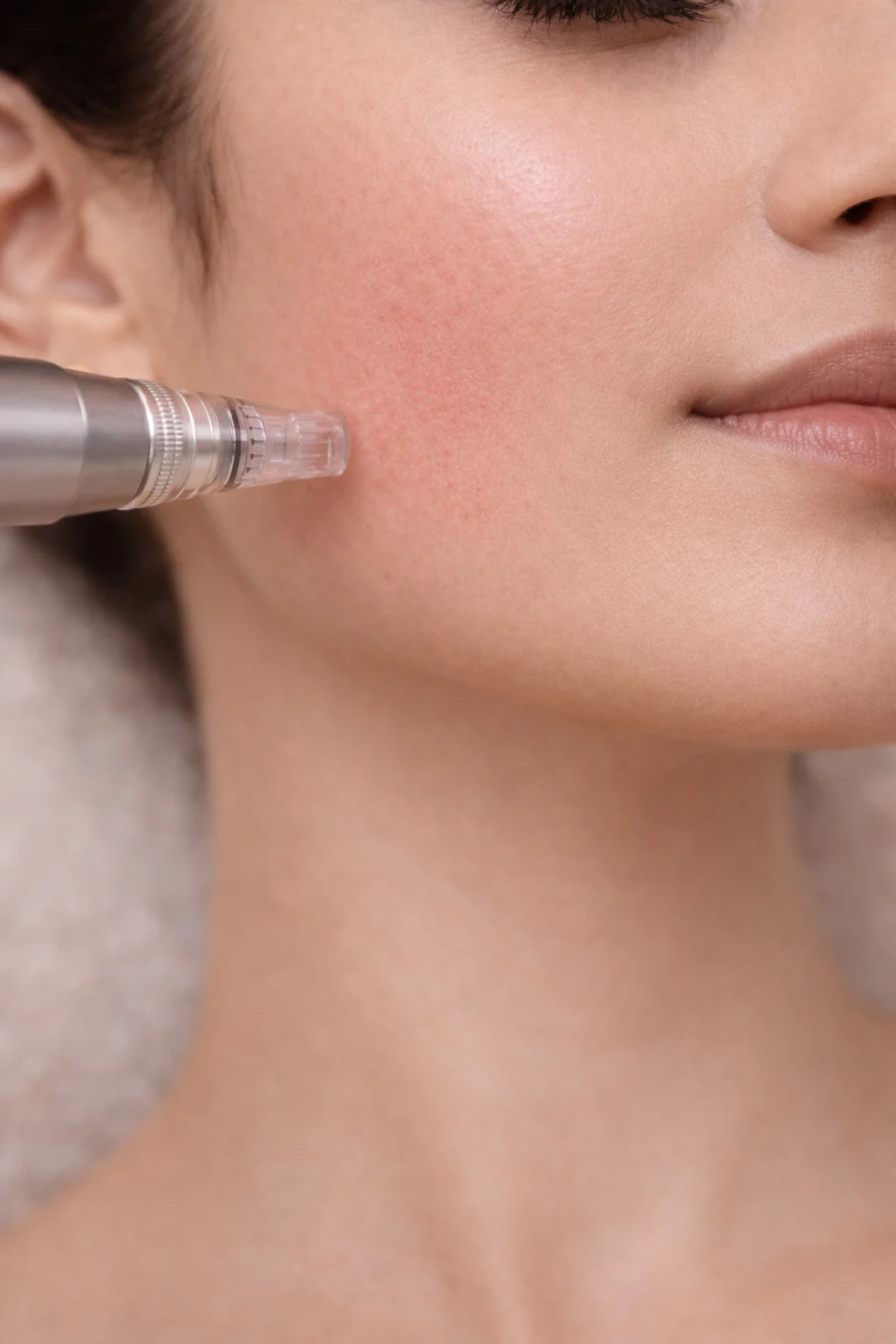
One of the most common questions at an initial consultation is: "What can be done about my acne scars?" It's also one of the most nuanced to answer — because acne scars are not a single entity. They form differently, sit at different depths in the skin, and respond to different treatments. Applying the wrong approach can have little effect, or in some cases, make things worse.
Here is a practical breakdown of what you may be dealing with, and what actually works for each.
Why Acne Leaves Scars
When a pimple — especially a deep, inflamed nodule or cyst — damages the dermis (the deeper layer of skin), the body attempts to repair it. This repair process involves collagen production, but it is rarely perfect. Too little collagen leaves a depression; too much leaves a raised scar. The result is the irregular texture that remains long after the active acne has cleared.
Importantly, the scar type depends on how the original injury healed, not just how severe the acne was. Two people with similar breakouts may heal differently.
The Main Types of Acne Scars
Atrophic Scars (Depressed)
These are the most common and involve a loss of tissue below the skin surface. They appear as indentations or pits. There are three subtypes:
Ice Pick Scars Deep, narrow, sharply defined pits — often described as small punctures in the skin. They extend deep into the dermis and are among the most difficult to treat because their depth means surface-level treatments have limited reach.
Best treatments: TCA CROSS (chemical reconstruction of skin scars), punch excision, followed by resurfacing.
Boxcar Scars Wider, flat-bottomed depressions with defined edges — similar in appearance to chickenpox scars. They can be shallow or deep.
Best treatments: Fractional laser, MNRF (Microneedling Radiofrequency), subcision, chemical peels for superficial cases.
Rolling Scars These have a wave-like, undulating appearance caused by fibrous bands beneath the skin pulling the surface downward. The edges are sloping rather than sharp.
Best treatments: Subcision to release the fibrous tethering, followed by PRP, MNRF, or filler to restore volume.
Hypertrophic and Keloid Scars (Raised)
These result from excess collagen production during healing. Hypertrophic scars stay within the boundary of the original wound; keloids extend beyond it.
They are more common on the chest, back, and shoulders, and are more frequently seen in certain skin types.
Best treatments: Intralesional steroid injections, silicone sheets, laser (non-ablative). Keloids require a different, more cautious approach than atrophic scars.
Post-Inflammatory Hyperpigmentation (PIH)
Technically not a true scar — this is a discolouration (brown or reddish patches) left after a pimple heals. The texture of the skin is normal; only the colour is affected.
PIH is more common in darker skin tones (Fitzpatrick types IV–VI) and tends to fade on its own over months, though this can be accelerated.
Best treatments: Q-Switch laser, chemical peels, topical brightening agents (kojic acid, niacinamide, vitamin C), consistent sun protection.
Why One Treatment Is Rarely Enough
Most patients have a combination of scar types — for example, ice pick and rolling scars on the same cheek, with areas of PIH layered over them. A single modality will address some but not all of this.
An effective treatment plan typically sequences interventions:
- Subcision first (if rolling scars are present) to release tethered tissue
- Resurfacing (Fractional laser or MNRF) to stimulate collagen and smooth texture
- Targeted chemical peeling or Q-Switch for pigmentation
- Maintenance with medical-grade skincare to preserve results
The interval between sessions matters too. Collagen remodelling is a slow process — results from a laser or MNRF session continue improving for up to 3–6 months after treatment.
What Not to Do
Attempting to treat acne scars while active breakouts are still present is counterproductive — new lesions will form new scars. Active acne needs to be controlled first, either with topical treatment, oral medication, or both.
Aggressive DIY treatments (strong at-home peels, unregulated derma rollers) can worsen certain scar types, particularly ice pick scars and active pigmentation.
The Honest Timeline
Scar revision is a long game. Significant improvement is achievable in most cases, but it requires multiple sessions, patience between treatments, and realistic expectations. Complete elimination is not always possible — the goal is meaningful, visible improvement that restores your confidence in your skin.
A proper assessment under good light — evaluating scar type, depth, skin tone, and active acne status — is the only way to design a plan that will actually work for your specific situation.