1
Before
Lesion assessment, modality selection, and local numbing if required.
Precise removal of skin tags, warts, moles, syringoma, milia, DPN, and other benign skin lesions using chemical or electrocautery technique.
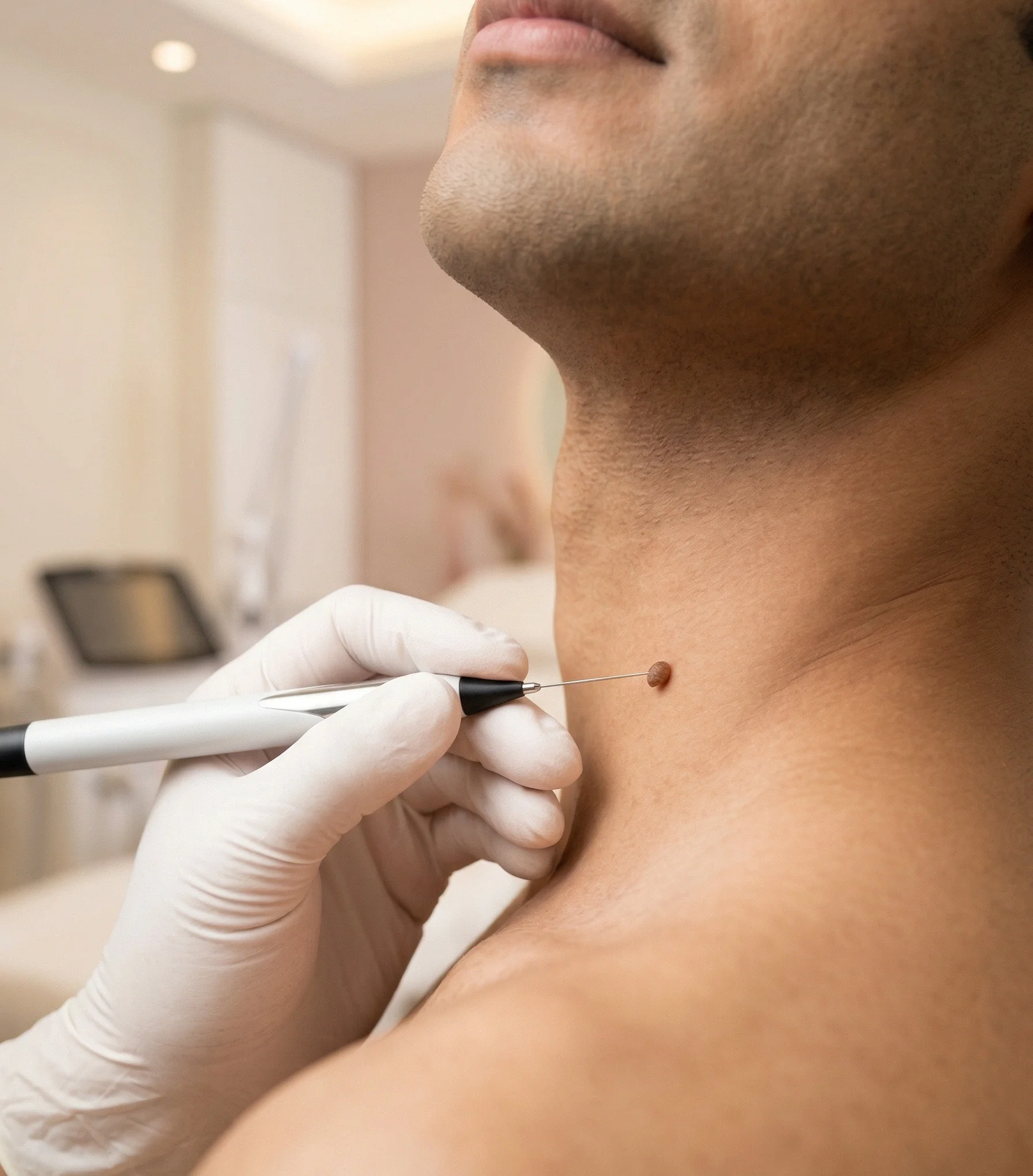
Practical planning details to help you decide quickly.
Cauterization is a dermatological procedure for the controlled destruction or removal of benign superficial skin lesions using either chemical agents or electrosurgical energy — leaving minimal scarring when performed correctly.
Electrocautery uses a precisely controlled electrical current to thermally ablate target lesions — ideal for skin tags, DPN (dermatosis papulosa nigra), syringoma, warts, and small sebaceous hyperplasia.
Chemical cauterization uses agents such as trichloroacetic acid (TCA) at high concentration to chemically destroy superficial lesion tissue — useful for smaller flat lesions, warts, and areas where electrical equipment is less suitable.
At Ixora, lesion type, depth, location, and skin tone are assessed before choosing modality to minimise PIH risk and optimise cosmetic outcome.
A simple three-stage journey from consultation to recovery.
Before
Lesion assessment, modality selection, and local numbing if required.
During
Controlled cauterization of target lesion(s) using selected technique.
After
Wound care instructions, scab management, and SPF guidance to minimise PIH.
Suitable for skin tags, warts, DPN, syringoma, milia, sebaceous hyperplasia, and other clinically assessed benign lesions.
Good preparation and aftercare are key to safe, consistent outcomes.
Every medical procedure has expected reactions and rare risks.
Some concerns improve faster when treatments are sequenced intentionally.
Chemical Peel
Medically selected peel formulations to treat acne marks, pigmentation, dullness, and uneven texture.
View Treatment →
LasersQ-Switch Laser
Advanced laser for pigmentation, freckles, sunspots, and overall skin brightening.
View Treatment →
SkinMicroneedling
Collagen induction therapy for acne scars, enlarged pores, uneven texture, and skin rejuvenation.
View Treatment →
Book a consultation to decide if this treatment, or a combination plan, is right for your goals.