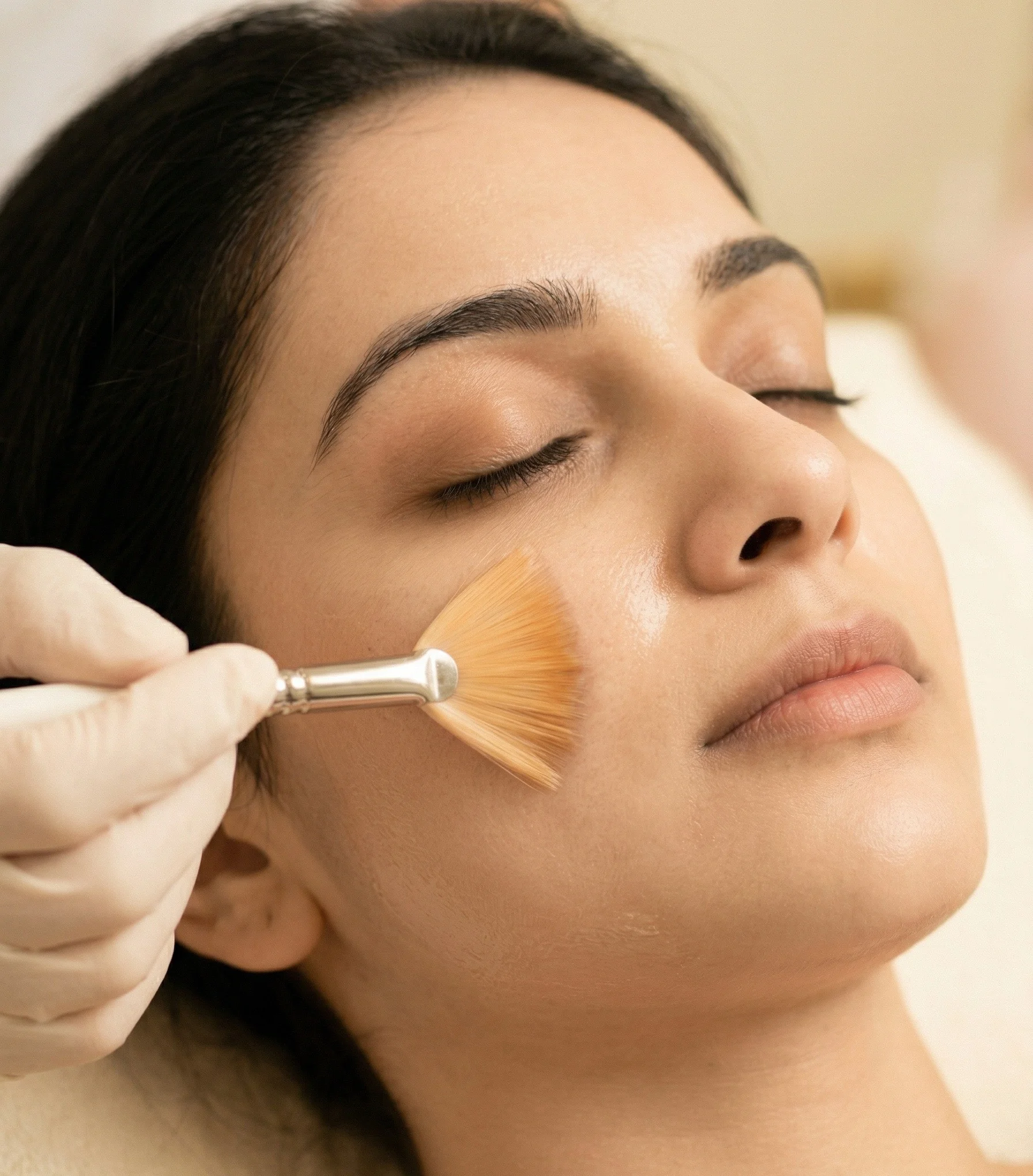
Chemical peels have a reputation — often based on dramatic images of post-peel peeling skin, or stories of treatments gone wrong. The reality, for the vast majority of clinic-performed peels at appropriate depths for appropriate candidates, is far more straightforward than the reputation suggests.
Understanding what a peel is, what it can and cannot do, and what the post-peel experience actually looks like is useful before deciding whether it is the right option for your skin concern.
What a Chemical Peel Does
A chemical peel applies an acidic solution to the skin surface. The acid causes controlled exfoliation and cellular disruption — the depth of which depends on the acid type, concentration, contact time, and skin preparation.
The result is a removal of the outer layers of skin, which stimulates the body's healing response: new skin cell production, collagen stimulation, and a fresher, more even surface emerging as healing completes.
Different acids work differently:
AHAs (Alpha Hydroxy Acids) — glycolic acid, lactic acid — are water-soluble and work primarily at the skin surface. They improve texture, radiance, and mild pigmentation. They are suitable for sensitive skin or as an introduction to chemical exfoliation.
Salicylic acid (BHA) — oil-soluble, penetrates pores, and is anti-inflammatory. Particularly useful for acne-prone skin and congested pores. Often the first choice for oily or acne-affected skin.
TCA (Trichloroacetic acid) — penetrates deeper, reaching the mid-dermis at higher concentrations. Used for more significant pigmentation, fine lines, and moderate acne scars. A mainstay of medium-depth peeling.
Phenol — deep peeling agent, rarely used today due to the significant recovery required and safer alternatives available.
Superficial, Medium, and Deep: What Each Means
Superficial peels affect only the outer epidermis. There is minimal peeling — the skin may feel dry and slightly tight, with minor flaking over 2–4 days. Redness is mild and resolves within hours to a day. Social downtime is essentially zero. Results are subtle and cumulative across a series.
Medium-depth peels penetrate into the papillary dermis. There is more visible peeling — the skin will peel noticeably over days 3–7, sometimes in sheets. Redness is more significant for the first 24–48 hours. Social downtime of 5–7 days should be expected. Results are more significant — meaningful improvement in texture, pigmentation, and early scarring.
Deep peels (full phenol) are rarely performed in routine aesthetic practice and are outside the scope of this discussion.
At Ixora, chemical peels are most commonly used in the superficial to medium range, calibrated for the patient's concern and skin type.
The Peeling Phase: What It Looks Like
This is the part patients are most unprepared for.
After a superficial peel, the skin may not visibly peel at all — or may have minor dry flaking around the nose and mouth (areas that tend to peel first). Many patients are surprised that there was no dramatic shedding.
After a medium-depth peel, particularly with TCA, the process is more visible. The skin tightens significantly in the first 24 hours, then begins to brown and separate from the surface, revealing new skin underneath. This typically peaks around days 4–5.
The important instruction during this phase: do not pick or pull the peeling skin. Premature removal of the peeling layer before the underlying skin is ready to be exposed increases the risk of PIH and scarring. It should separate naturally.
During the peeling phase, keep the skin moisturised with the recommended barrier cream, avoid active skincare ingredients (no acids, retinols, or vitamin C), and avoid sun exposure completely.
Who Benefits from Chemical Peels
Chemical peels are appropriate for a range of common skin concerns:
Acne and oily skin: Salicylic acid peels reduce comedones, decrease sebum, and have a mild anti-inflammatory effect on active acne. A series of 4–6 monthly sessions is a standard protocol.
Post-inflammatory hyperpigmentation (PIH): Glycolic or lactic acid peels improve pigmentation through accelerated cell turnover. Results are cumulative and require sun protection between sessions.
Melasma: Peels are used as part of a combination protocol for melasma, typically alongside topical agents. They are not used as the sole treatment because melasma has a dermal component that surface exfoliation alone cannot address.
Mild acne scarring: Superficial-to-medium peels can improve textural irregularities and mild boxcar scarring. Deeper scars (ice pick, severe boxcar) require more targeted approaches.
Dull, uneven skin: A series of superficial peels is one of the most reliable ways to achieve a clearer, more even complexion in patients whose primary concern is radiance and tone, rather than structural concerns.
What Peels Cannot Do
Chemical peels are not the right solution for:
- Deep acne scars — particularly ice pick scars, which require punch techniques or deep resurfacing
- Skin laxity — peels do not lift; tissue descent requires mechanical repositioning or volume restoration
- Dynamic wrinkles — expression lines respond to neuromodulators, not peels
- Hair loss or scalp concerns — obviously outside the scope
A Note on Darker Skin
This bears repeating because it is clinically important: chemical peels in Fitzpatrick IV–VI skin require careful calibration. The risk of post-peel PIH is real, and the most common cause of peel complications in South Asian patients is using concentrations or peel types designed for lighter skin.
A lower-concentration peel with more sessions is almost always the right approach. An aggressive peel in darker skin is not a shortcut — it is a risk.
Pre-peel priming with topical lightening agents (niacinamide, azelaic acid, kojic acid) for 4–6 weeks before a medium-depth peel is standard protocol to reduce the PIH risk in darker skin types.
What a Course of Peels Looks Like
A typical protocol for superficial peels targeting acne, PIH, or general skin health:
- Sessions: 4–6, spaced 3–4 weeks apart
- Each session: 15–30 minutes at the clinic; neutralisation and post-peel products applied; specific aftercare instructions provided
- At-home care between sessions: Gentle cleanser, broad-spectrum SPF 50, moisturiser, no active acids or retinols for 5–7 days post-peel
- Results visible from: 2–3 sessions for most patients
- Maintenance: 1–2 peels annually after completing the initial course
A consultation that assesses your skin type, concern, and current skincare routine is the starting point for any peel series. The specific peel formulation and depth are chosen based on that assessment — there is no one-size-fits-all approach.