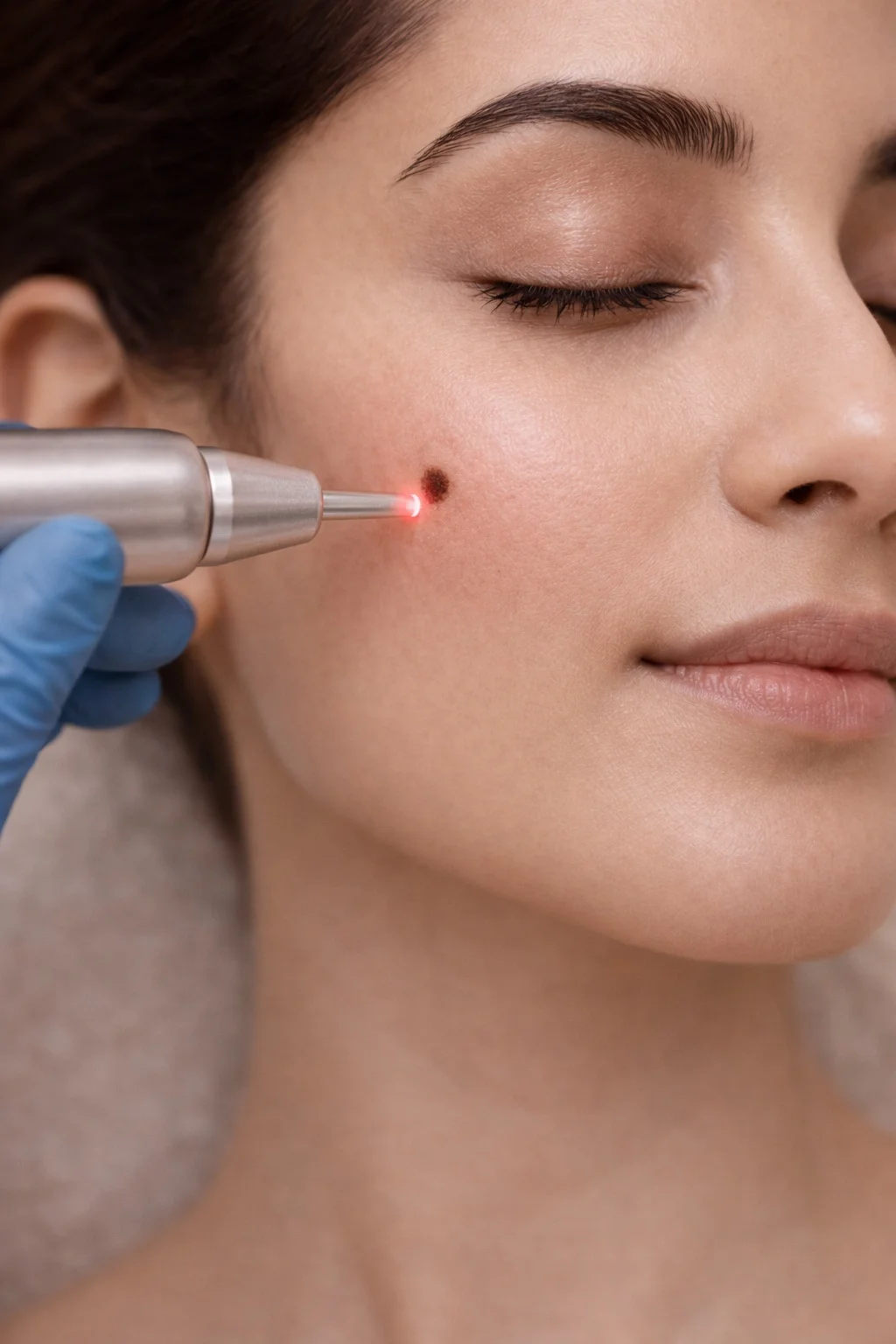
Pigmentation is one of the most frequently treated concerns at dermatology clinics across South Asia — and also one of the most mismanaged. The reason is that the advice and protocols developed for lighter Fitzpatrick skin types (common in Western medical literature) do not translate directly to the darker skin tones that are the norm in Kashmir and across the subcontinent.
Understanding why this is, and what actually works for your skin type, is essential before starting any treatment.
Why Darker Skin Is More Prone to Pigmentation
Skin gets its colour from melanin, produced by cells called melanocytes. In darker skin types, melanocytes are not more numerous — but they are more reactive. Any inflammation, irritation, injury, or hormonal change can trigger excess melanin production, leading to darkened patches.
This is why darker-skinned individuals are more prone to:
- Post-inflammatory hyperpigmentation (PIH): Dark marks left after acne, eczema, or even a minor scratch
- Melasma: A hormonal pigmentation pattern, typically on the cheeks, upper lip, and forehead, common in women and triggered or worsened by sun exposure
- Friction pigmentation: Darkening from repeated rubbing or pressure — on the knuckles, neck, underarms
In lighter skin types, the melanocyte response is less aggressive. This is why the same laser setting, the same peel concentration, or the same skincare ingredient that works well on a Fitzpatrick II patient can cause a post-inflammatory hyperpigmentation flare in a Fitzpatrick IV or V patient if the protocol is not adjusted.
The Kashmir Factor
The climate and lifestyle in Kashmir create a specific pigmentation context:
High-altitude UV exposure: Srinagar sits at approximately 1600 metres above sea level. UV intensity increases by roughly 10% for every 1000-metre gain in altitude. Combined with the reflective surface of snow in winter months, UV exposure is significant even on overcast days — and many patients do not use SPF because they don't feel the sun is "strong enough" here.
Central heating and indoor dryness in winter: This compromises the skin barrier, making skin more reactive and more susceptible to irritation-triggered pigmentation.
Cultural skincare habits: Prolonged use of potent fairness creams (many of which contain undisclosed corticosteroids) is common and causes a pattern called steroid-induced pigmentation — which is darker, more uniform, and much harder to treat than typical sun damage.
The Different Types of Pigmentation
Epidermal pigmentation sits in the upper layers of the skin. It appears brown, has relatively well-defined borders, and responds well to topical agents and superficial treatments.
Dermal pigmentation sits deeper. It appears grey-blue or ashy. It does not respond well to superficial peels and requires targeted laser wavelengths that penetrate deeper.
Mixed pigmentation — which melasma often is — has components at both levels. This is why melasma is notoriously difficult to treat completely: a treatment that clears the epidermal component may leave the dermal component behind, or worse, a treatment calibrated for the deep layer may trigger a surface-level flare.
A dermatologist examining your pigmentation under a Wood's lamp (UV light) can distinguish epidermal from dermal involvement, which directly informs the treatment approach.
What Actually Works
Q-Switch Laser
The Q-Switch laser delivers energy in nanosecond pulses, selectively shattering melanin deposits without significantly heating the surrounding tissue. It is safe for darker skin when used at appropriate settings and intervals.
It is effective for: sun spots, post-inflammatory hyperpigmentation, freckles, and the epidermal component of melasma.
It is not a one-session fix. Multiple sessions spaced 4–6 weeks apart are typically needed, and maintenance sessions are often required long-term.
A critical caveat: Q-Switch used at the wrong setting in darker skin can cause hypopigmentation (white patches) that are more conspicuous and more difficult to treat than the original pigmentation. This is a risk that requires calibrated technique and appropriate patient selection.
Chemical Peels
Superficial to medium-depth peels remove the outer layers of skin and stimulate controlled renewal. They are effective for epidermal pigmentation — PIH, uneven tone, mild melasma.
The acid concentration, contact time, and post-peel care must all be adjusted for darker skin. A peel that causes minimal redness in lighter skin may cause significant inflammation — and a subsequent pigmentation flare — in a Fitzpatrick IV or V patient.
A series of 4–6 sessions, rather than one aggressive peel, is the typical approach for pigmentation in South Asian skin.
Topical Agents
Topical treatment is not optional — it is the foundation. Even if you have laser sessions, without a consistent topical regimen, pigmentation will return faster and more severely.
Effective evidence-based options include:
- Niacinamide (vitamin B3): Reduces melanin transfer to skin cells, well-tolerated
- Kojic acid: Tyrosinase inhibitor, reduces melanin synthesis
- Azelaic acid: Anti-inflammatory and pigmentation-reducing, particularly useful for melasma and PIH
- Vitamin C (ascorbic acid): Antioxidant that reduces oxidative pigmentation, must be stable formulation
- Tranexamic acid: Increasingly used for melasma in oral and topical form
Hydroquinone (the most potent conventional depigmenting agent) is effective but should only be used under medical supervision for defined periods — prolonged unguided use causes ochronosis, an irreversible blue-black discolouration.
The Non-Negotiable: Sunscreen
No pigmentation treatment works without consistent, daily sun protection. UV exposure re-stimulates the melanocytes and reverses treatment gains.
For Kashmiri patients: SPF 30–50 PA+++ applied every morning, even in winter, even on cloudy days, even when you are mostly indoors (if near windows). The single most common reason for poor treatment outcomes is inadequate sun protection between sessions.
What to Be Cautious About
- Unverified fairness creams: Many popular products contain undisclosed potent corticosteroids or mercury. Short-term brightening from steroid use is followed by rebound darkening and skin thinning that is difficult to reverse.
- Over-the-counter peels: Unregulated peel strengths in darker skin carry a real risk of PIH flare.
- Aggressive laser treatments in the summer months: The period of maximum UV exposure is not the time for multiple laser sessions without very strict sun avoidance.
Pigmentation in darker skin is treatable — but it requires patience, a calibrated multi-modal plan, and a consistent skincare regimen. The goal is not an overnight transformation but a sustained, meaningful improvement that does not compromise skin health in pursuit of a number on a shade scale.